
Spirit of ’76
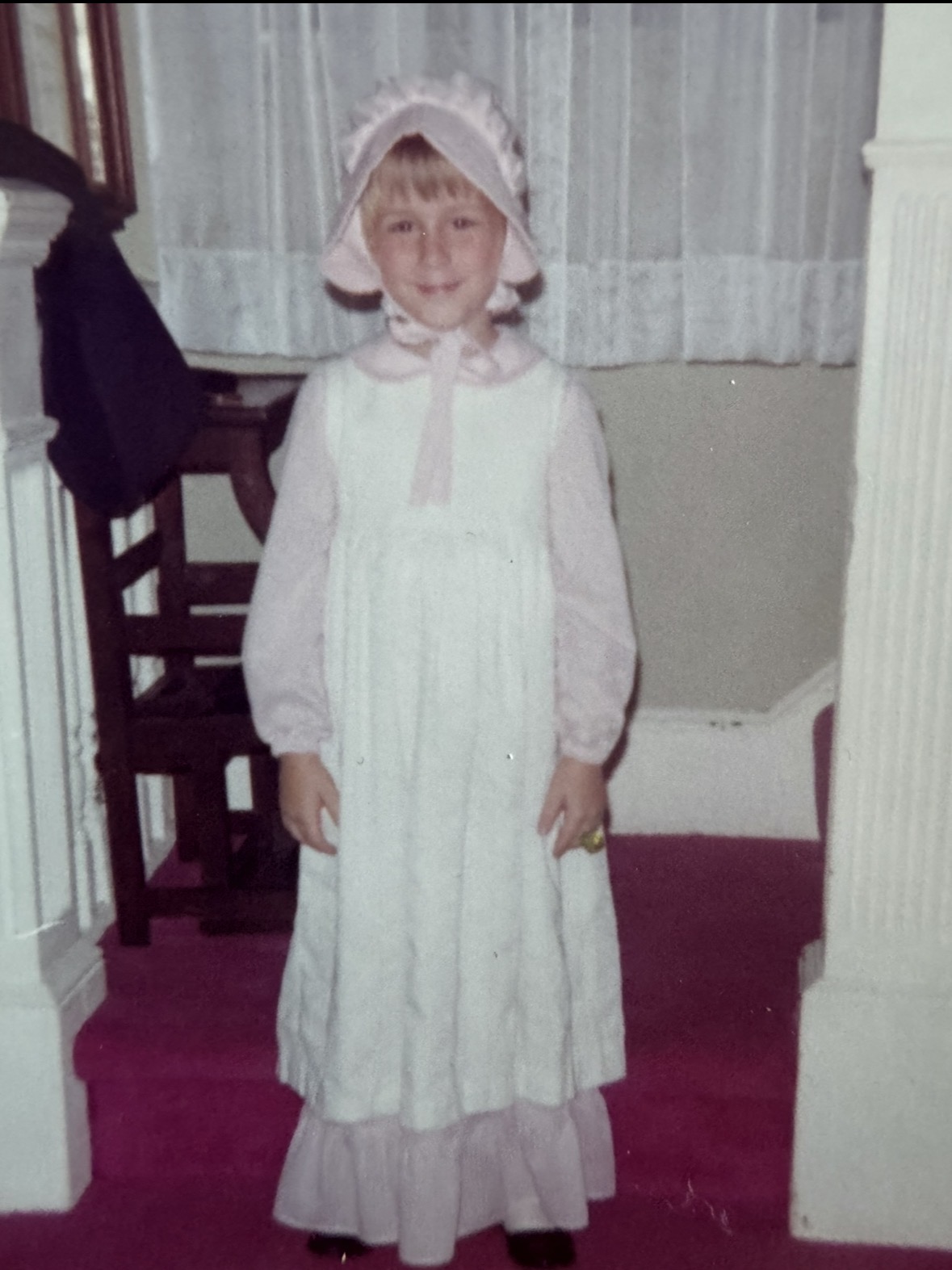
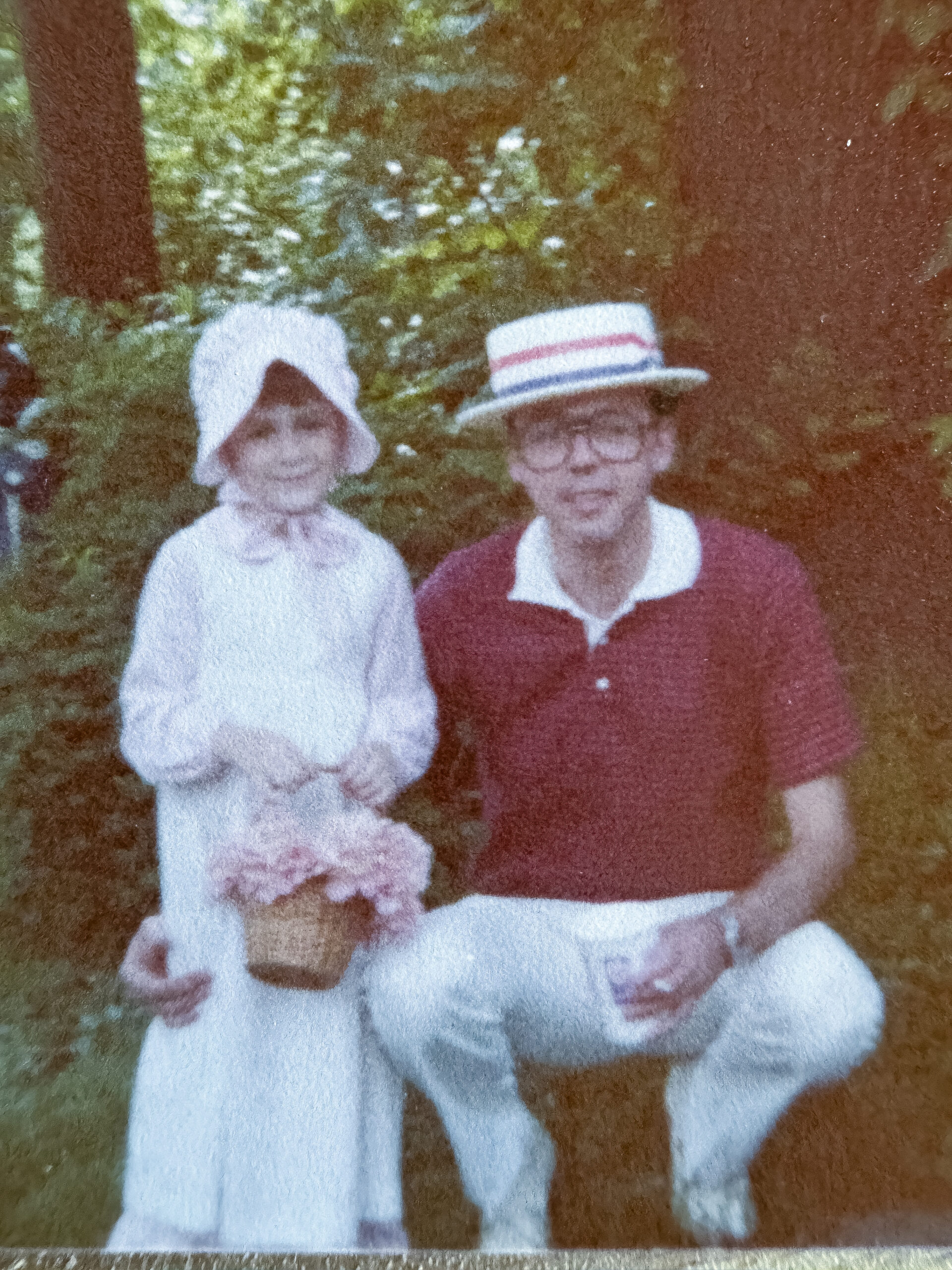
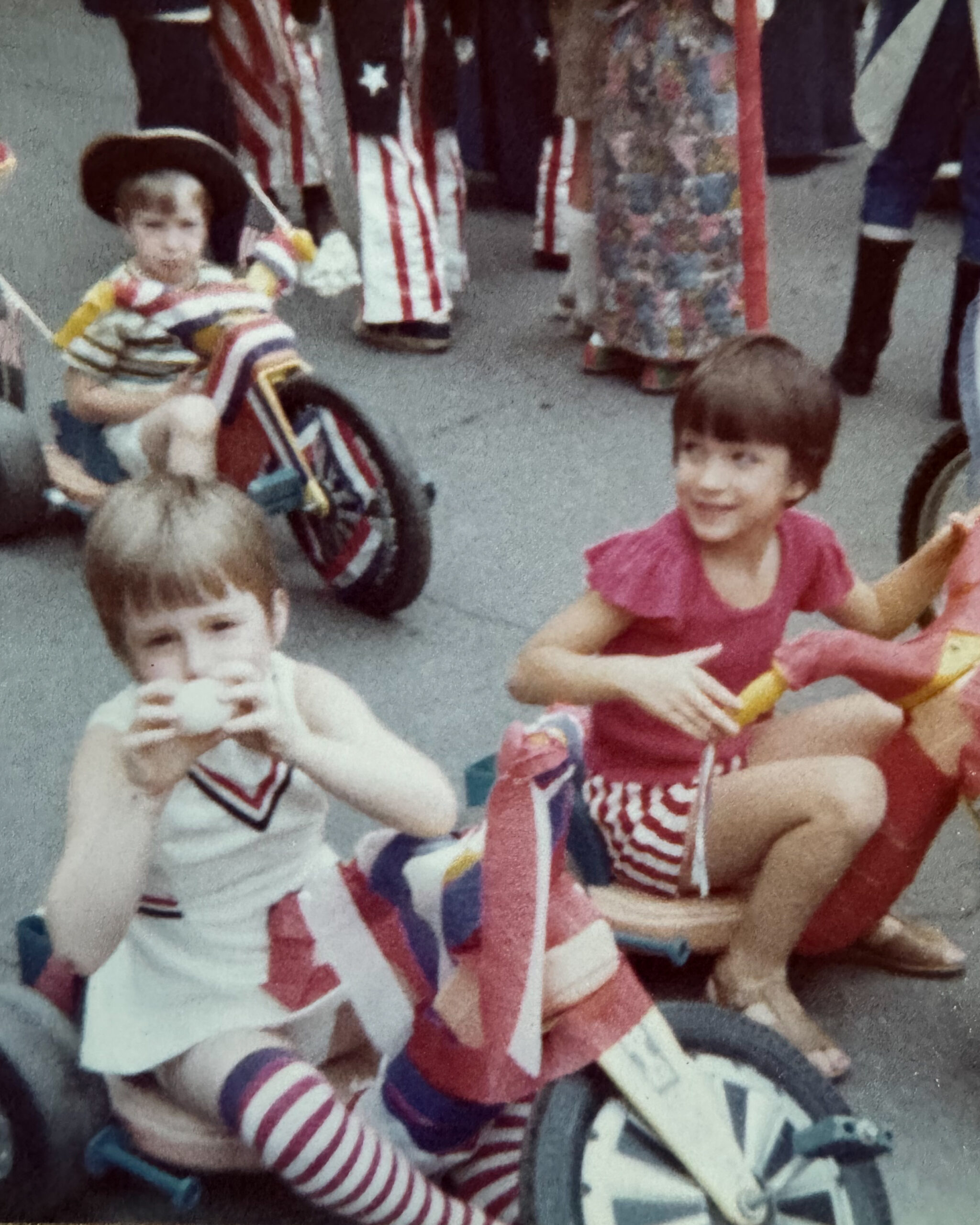
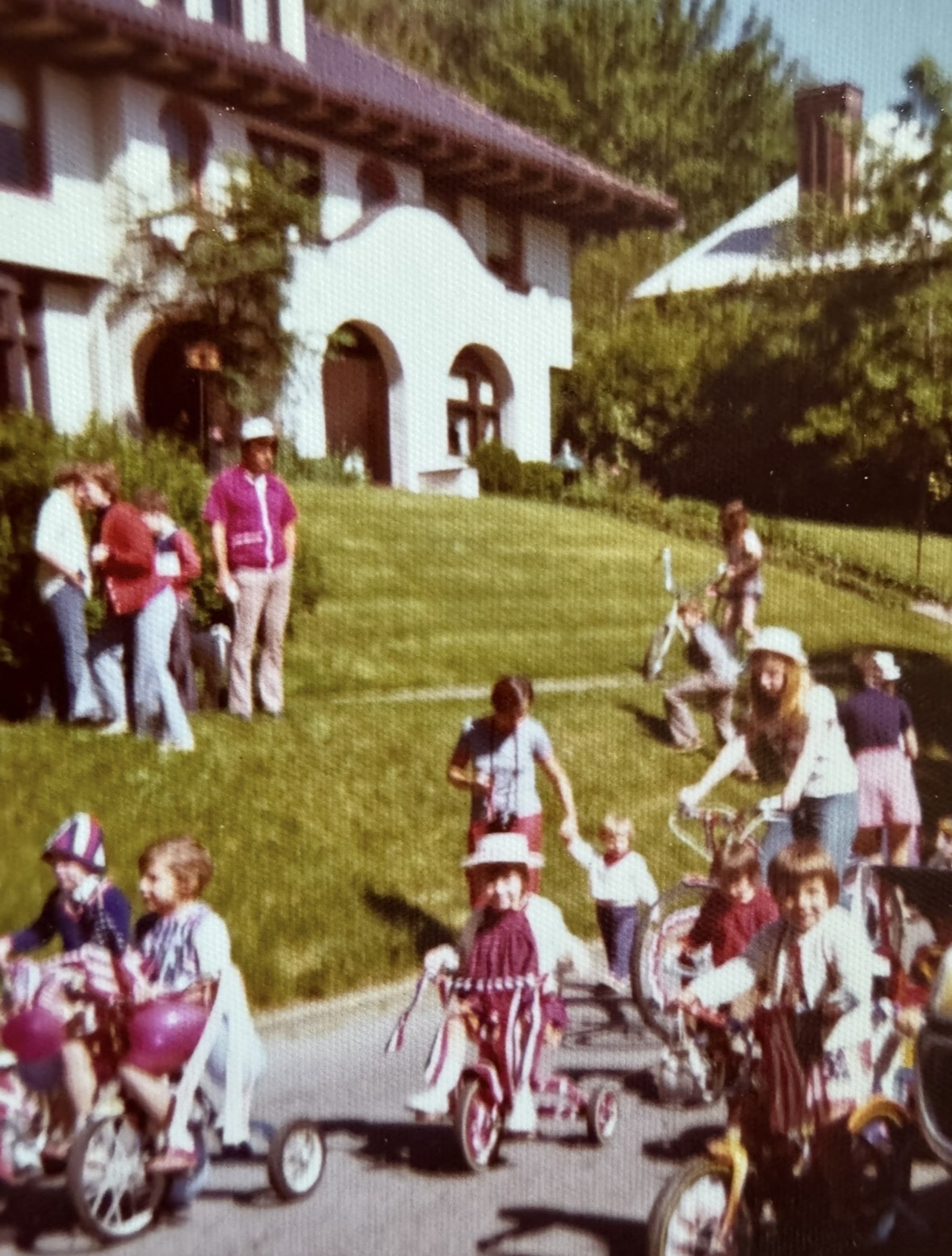
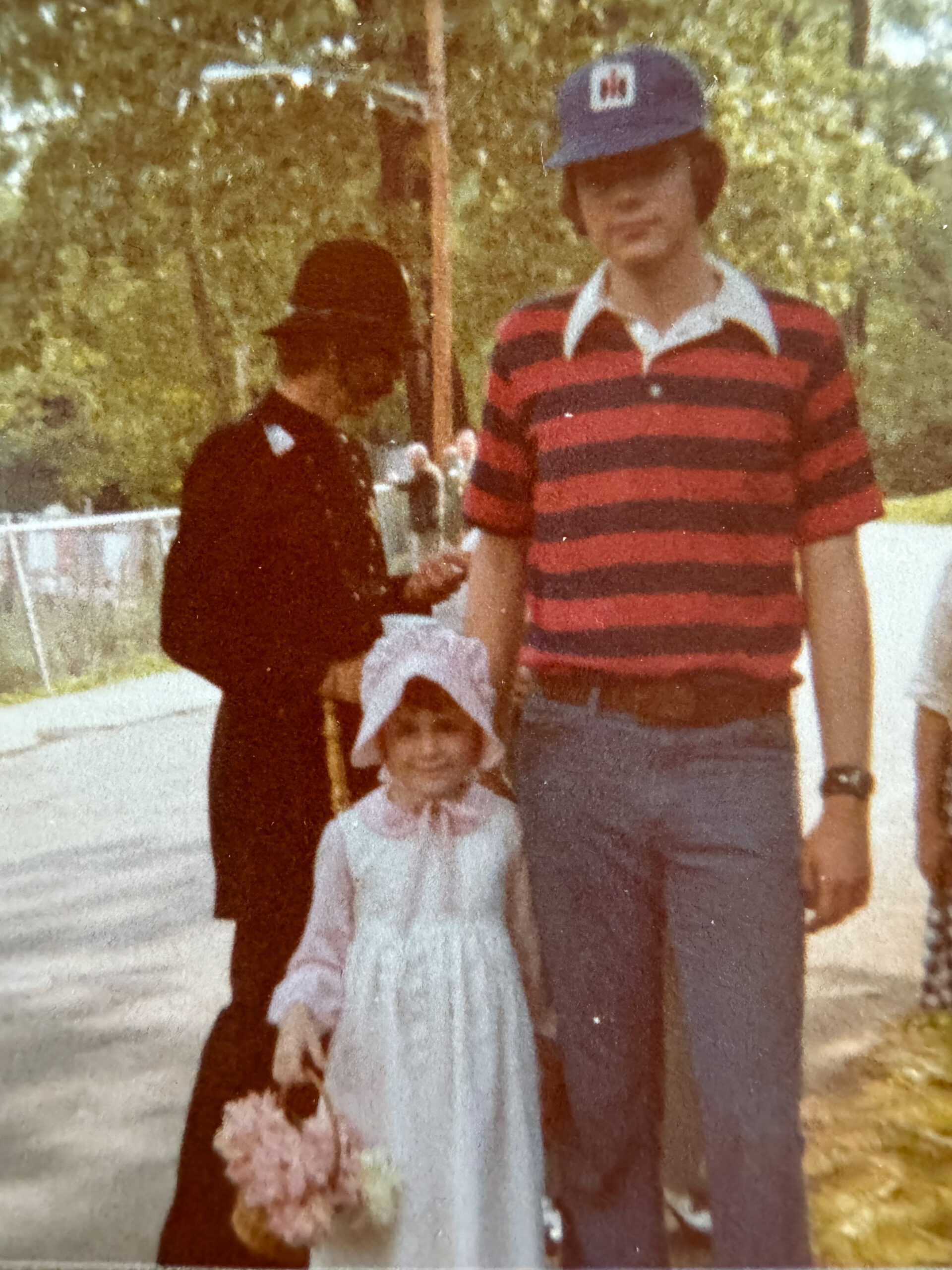
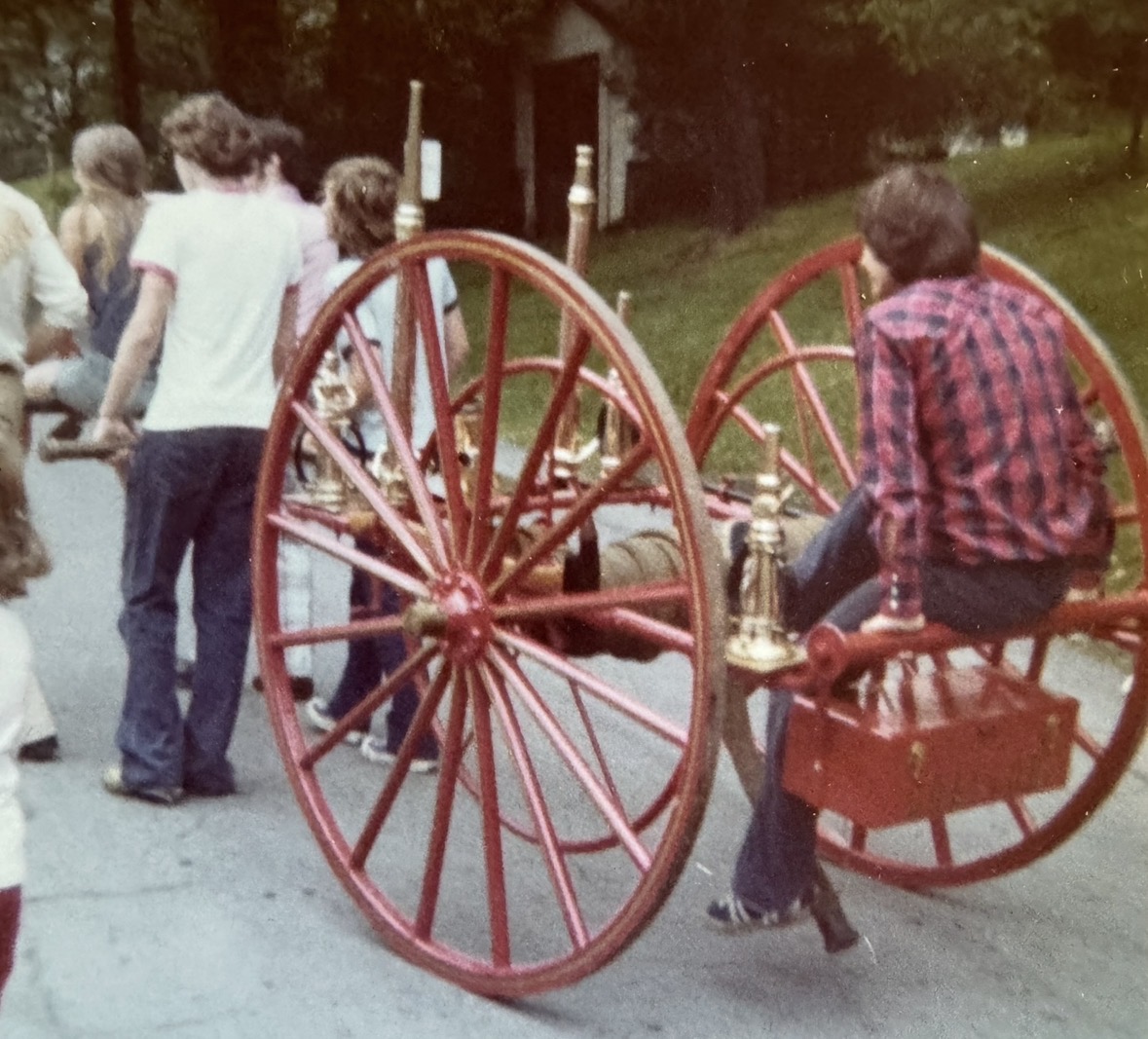
I have a photo of myself at six years old, standing in a doorway in a homemade pink-and-white pioneer dress and a bonnet my mother sewed by hand. There’s another one of me and my dad in the park, him in a red-white-and-blue boater hat, me clutching a basket of flowers. There’s a fire wagon with wheels taller than the kids sitting on it. There’s a whole street of us on banana-seat bikes and Big Wheels, streamers woven through the spokes, parading around our town like we were the whole point of the summer. Because for one day, we were.
That was the Bicentennial. 1976. My town threw a parade with actual Uncle Sam costumes and colonial dresses and a hand-pumped fire engine somebody’s grandfather kept polished in a barn somewhere. Nobody was checking anybody’s voter registration before they let them ride a trike down Hamilton Road. We were just… together. Loud, sunburned, sugar-drunk on red-white-and-blue together.
While I was too young to realize, I’m now aware that our grownups were relieved that Vietnam and Watergate were behind us. Our boys were home—perhaps broken—but home. Gas prices were low, we had Archie Bunker being told off by the Meathead, and we kids had a new season of Schoolhouse Rock: AMERICA ROCKS!
NO MORE KINGS! SHOT HEARD ROUND THE WORLD! WE THE PEOPLE! And perhaps the most important, The Great American Melting Pot, welcoming people around the world seeking freedom.
Fifty years later, I have been waiting for the 250. I mean genuinely looking forward to it—I want to be around for the tricentennial too, if only to tell some kid in 2076 what 1976 felt like. But if I’m honest with you, and I’m always honest with you, this doesn’t feel like the sequel I ordered. It feels like somebody bought the rights to the franchise and forgot what made the original good.
June, 2026
Here’s the thing that’s been eating at me. The moments this year that actually *felt* like the spirit of that 1976 parade—the coming-together, the pride-not-performance, the “look what we built” energy—didn’t happen under a banner that said “America 250.” They happened in June, almost by accident, scattered across completely different rooms.
It was Pride, unapologetic and loud. It was the Knicks, a city losing its mind together over a basketball team, strangers hugging strangers. It was the World Cup where this country welcomed another MELTING POT and are discovering other cultures, celebrating wins and mourning losses together. And it was watching the Obama Presidential Center open on Juneteenth, thousands of people packed onto Midway Plaisance, with Bruce Springsteen and Stevie Wonder and John Legend on the same stage. It shone in a former president getting choked up while his wife talked about the country they still believe in. Former presidents from BOTH sides sharing the stage, and even people who never voted for him lining up to walk through it. That whole weekend felt more like my colonial bonnet and my dad’s boater hat than anything with “Freedom” slapped on a logo has felt so far.
None of those things were trying to be patriotic. They just *were.* That’s the part I keep circling back to—real love of country doesn’t announce itself, it just shows up in a crowd that’s happy to be in the same place at the same time. It is welcoming people to our homeland.
Proud to Be An American...
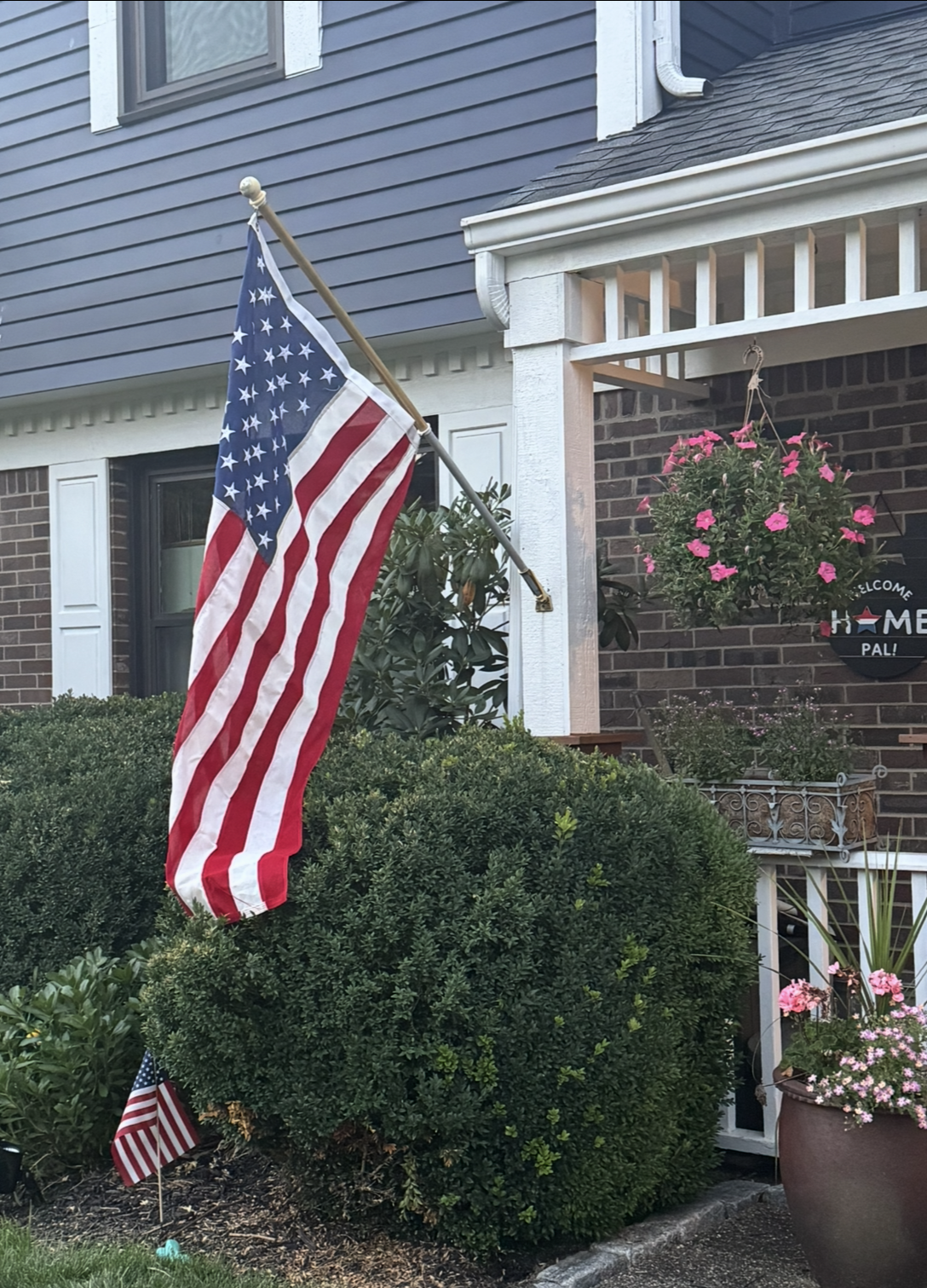
I want to be fully clear about something, because I know how this sounds coming from a woman who’s about to tell you she’s flying a flag: I resent the idea, creeping in from certain corners, that loving this country is a costume only one side gets to wear or that the flag belongs to a particular voting bloc. “Patriot” is not code for something narrower and meaner than it was when I was a kid dressed as a pioneer girl in our town’s July 4th celebration.
That’s not patriotism. That’s branding. And branding is exactly what the 250th has felt like so far—official, top-down, a little defensive, engineered rather than *felt*. The Bicentennial was a party the whole neighborhood (and country)threw because we were proud, full stop, no asterisk. It wasn’t about one party, one religion, or one man’s ego. This year it feels like the country’s throwing itself two different parties in two different rooms, and calling only one of them the real one.
While that makes me mad, I’m not letting division win.
My dad chose this country. He didn’t inherit it, he didn’t get handed it—he came here on purpose, wanting it, and that has always meant something different to me than default citizenship does. When I put out my flag and put on my red, white, and blue, it’s not a statement about who’s in office or who I voted for. It’s for him. It’s for that six-year-old in the bonnet who didn’t know yet that any of this would get complicated. It’s for a country that, at its actual best still knows how to fill a stadium or a plaza or a cul-de-sac with people who are simply glad to be there together.
I’m not ceding the flag to anybody. I’m not ceding the word “patriot” either. I loved this country before it was a talking point and I’ll love it after. I just miss the parade where nobody checked your ID at the door — they just handed you a streamer and told you to get on your bike.
Here’s to the tricentennial. I plan to be very old, very loud, and still wearing red, white, and blue on purpose.